
MP demands action on knife crime after spate of stabbings in Edinburgh
Tackling knife crime must be a greater priority, with the Scottish and UK governments working together to save lives, says Edinburgh Labour MP Scott Arthur after four alleged stabbings in as many weeks in his constituency.
He said there was no easy answer or single solution, but called for co-ordinated prevention strategies, closer co-operation and joint community initiatives.
And he praised the efforts of campaigner Lisa Petrie, whose son John McNab was killed in an alleged stabbing in Leith last year and who is working for emergency “bleed kits” across the city and greater controls on the display of knives in shops.
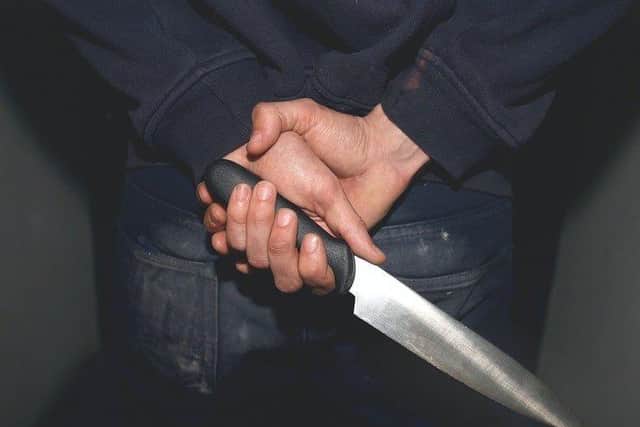

Dr Arthur spoke out after the four alleged stabbings in his Edinburgh South West constituency in recent weeks. On March 2, a man was arrested after a knife incident in the Calders which left two people needing hospital treatment. A week later, seven teenagers were arrested over the alleged stabbing of a 38-year-old man in Clovenstone Gardens, Wester Hailes. Police launched an attempted murder hunt after a 20-year-old man was allegedly stabbed in Sighthill. And this week a man was charged with attempted murder over the alleged stabbing of a 50-year-old man in Wardlaw Street, Gorgie.
In a blog, Dr Arthur said: “For over a decade, the most common method of killing in Scotland has remained unchanged: a sharp instrument, most often a knife. It is a stark and enduring reality that has persisted even as overall violent crime has trended downward.”
He said the four recent incidents were an important reminder that while the situation in Scotland was much improved, it was by no means resolved.
“We can look at these as isolated moments, or we can face the uncomfortable possibility that they form part of a wider, more systemic pattern. We can point to the underfunding of Police Scotland and/or demand tougher sentencing, but I feel we have to also look at the wider issues at play.
“In 2023–24 alone, Scotland recorded 2,137 crimes involving a knife or pointed weapon. That same year, 438 people were admitted to hospital and 28 lives were lost because of assaults with sharp objects. Each person is someone’s child, parent, friend, or neighbour.
“If we care about our communities, we have to acknowledge that change is needed, both on the streets and in the halls of power. The Scottish Government has recently come under fire, with them being accused of ‘failing to get a grip’ on the rising tide of youth violence. Critics have branded the government’s approach as weak and reckless, arguing that a lack of meaningful deterrents has left young people feeling unsafe.
“In the absence of clear government leadership, I’ve been especially moved by the determination of Lisa Petrie, a mum from Leith whose son was killed in a stabbing last year. In her grief, she chose action and has been campaigning to install emergency bleed kits across Edinburgh – lifesaving tools designed to treat catastrophic blood loss in the vital minutes before paramedics arrive.
“She has also called for kitchen knives in shops to be placed in locked cabinets or behind counters, a simple step that could deter impulsive theft or misuse.”
He said he had asked in the Commons about the issue of round-tipped knives, which reduced the risk of deep wounds. And he said in some parts of London, there were knife‑amnesty bins offering a safe, anonymous way to dispose of weapons, which had coincided with a fall in young people’s knife‑related hospital admissions.
Dr Arthur continued: “No single measure will solve this problem, but every step, every funding review, and every honest conversation brings us closer to a safer Scotland.
“We can choose to leave action on this to people like Lisa Petrie, or we can expect all political parties in Scotland and across the UK to work together on this issue.
“We need to pool resources, expertise, and data to protect communities. So lets listen to people like Lisa Petrie, but also demand more action at all levels of government. Coordinated prevention strategies, early intervention programmes, and consistent support for young people are essential to reducing harm.
“By aligning legislation, investing jointly in community initiatives, and strengthening cross‑border policing and intelligence, both governments can deliver safer streets and greater opportunities for those at risk. Cooperation, not division, is the key to saving lives and building a safer future for everyone across the UK.”
A 16-year-old boy has been charged with John McNab’s murder.